This Is the Scariest Picture Book Ever Written
By Sarah Hall
Was there a book from your childhood that terrified you so much that it still haunts you to this day?
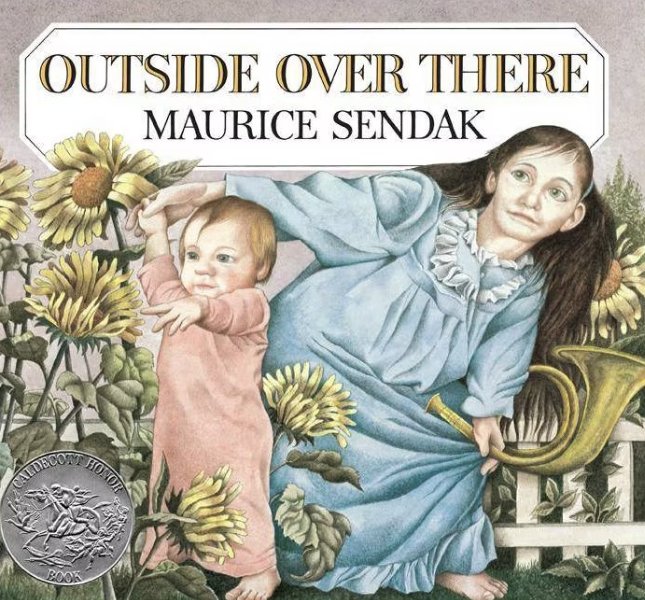
For me, that book was Outside Over There, by Maurice Sendak, a gloomy and phantasmagoric exploration of what happens when absentee parents leave their children to fend for themselves in a terrifying demonscape.
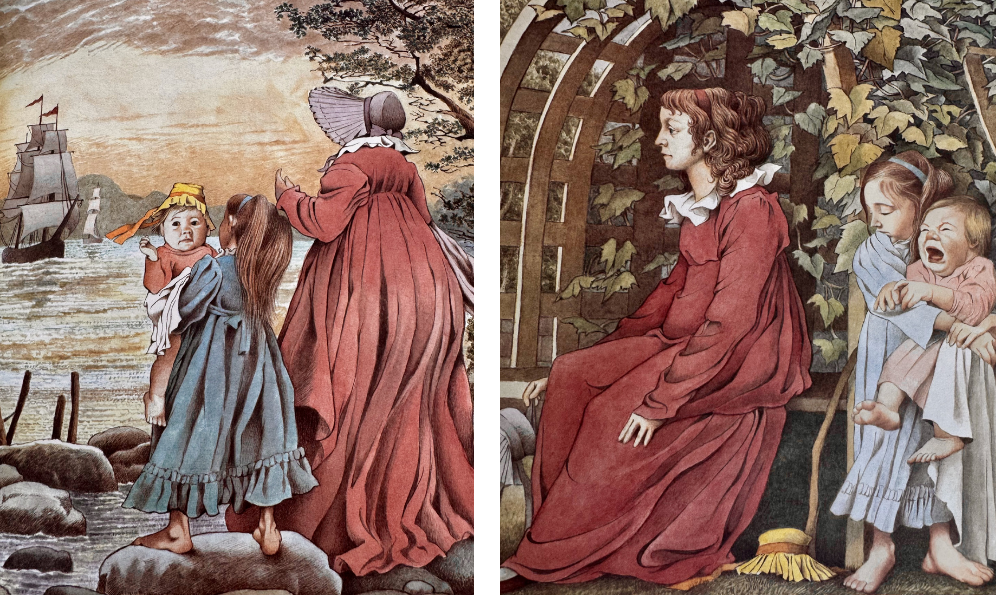
From the story's outset, it's clear that the main character, Ida, and her unnamed baby sister don't have much in the way of parental support. Neither Papa, who's "away at sea," nor Mama who's "in the arbor" (and seemingly catatonic, possibly because of Papa's seafaring ways) is able to be physically or emotionally present for their two daughters.
Left to care for her little sister on her own, young Ida tries to soothe the baby by playing some tunes on her horn. Unfortunately, she gets a little too caught up in the music, and while she's not watching, a crew of hoodie-wearing goblins materializes and kidnaps her sister, leaving behind a creepy replica made of ice.
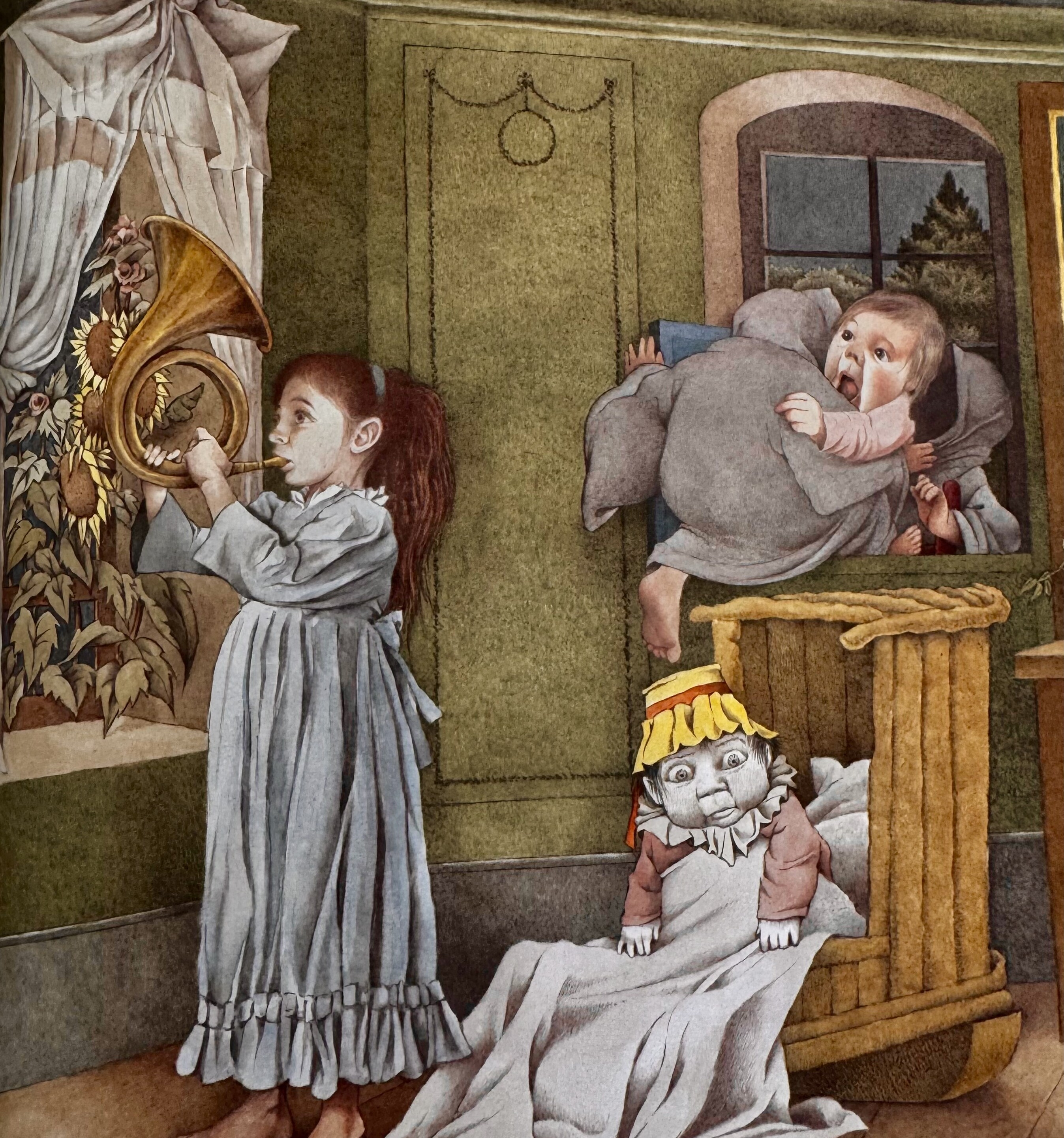
Because the ice baby is the same general size and shape of the real baby, it takes Ida a little while to notice what's transpired. It's only when she stoops to offer a sweet, sisterly hug that she makes the discovery, and knows instantly what's happened: the real baby's been stolen to become a "nasty goblin's bride."
As a child, this was one of the more terrifying elements of the story to process. How was it so immediately obvious to Ida that her sister was a victim of goblin baby-trafficking? If there was such a known risk of goblin invasion in the area, why weren't more safeguards taken against them?
Was I, too, in grave danger of being kidnapped by goblins in the name of unholy matrimony?
Ida, however, isn't scared by the realization–she's mad, and determined to avoid becoming the sister-in-law of a goblin at all costs. So she gears up in her mom's raincoat, sticks her giant horn in a roomy pocket, and prepares to head out on a reconnaissance mission. But, having already screwed up once by not watching the baby, she now makes yet another "serious mistake."
She climbs "backwards out her window into outside over there."
This, too, was a particularly scary detail. Such a seemingly minor error, and yet it's enough to shunt her into a sort of alternate sky dimension where she falls into a dream-like state, powerless to help her hostage sister.
Who knew what consequences awaited me, should I inadvertently exit a door or window the wrong way?
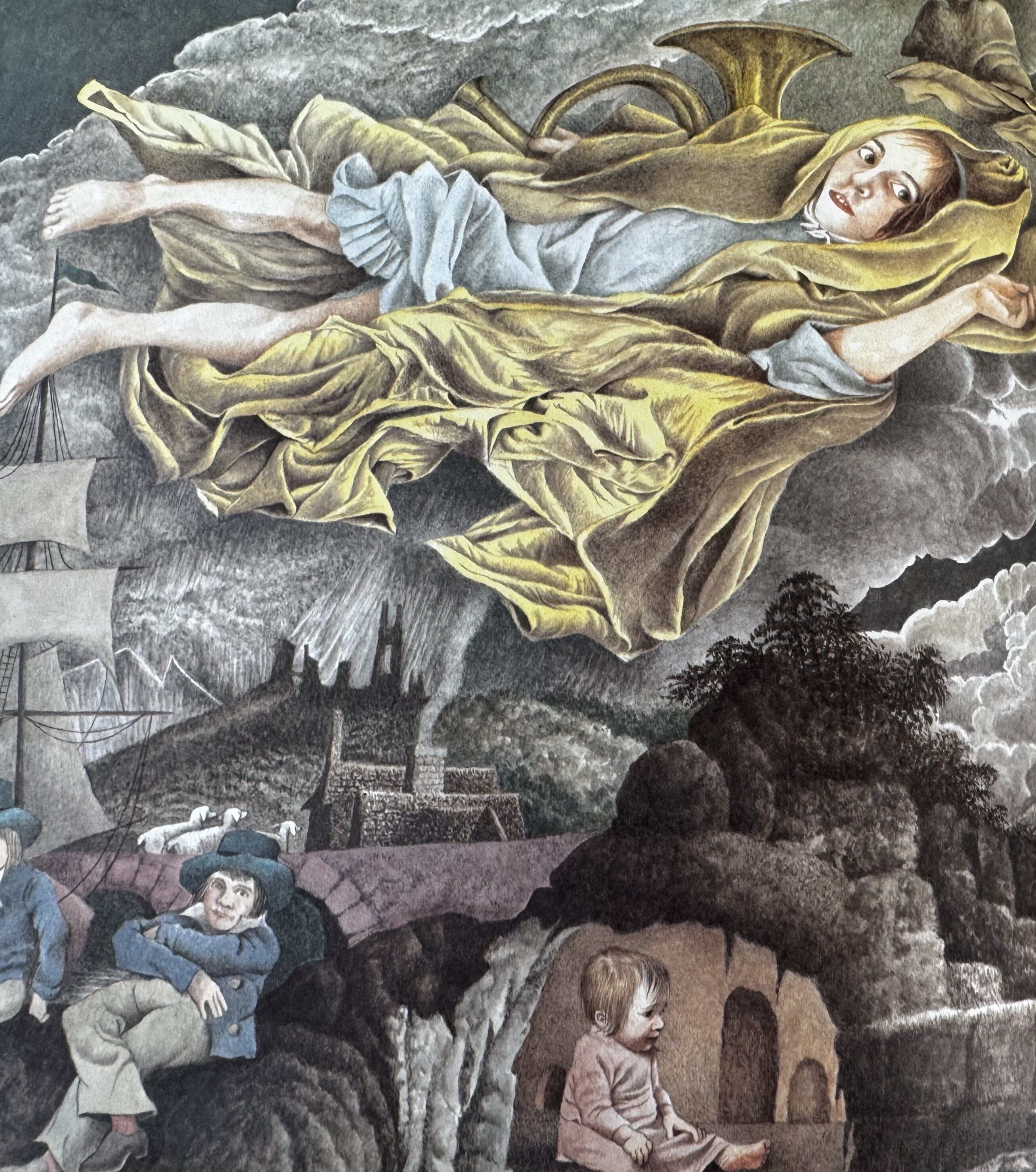
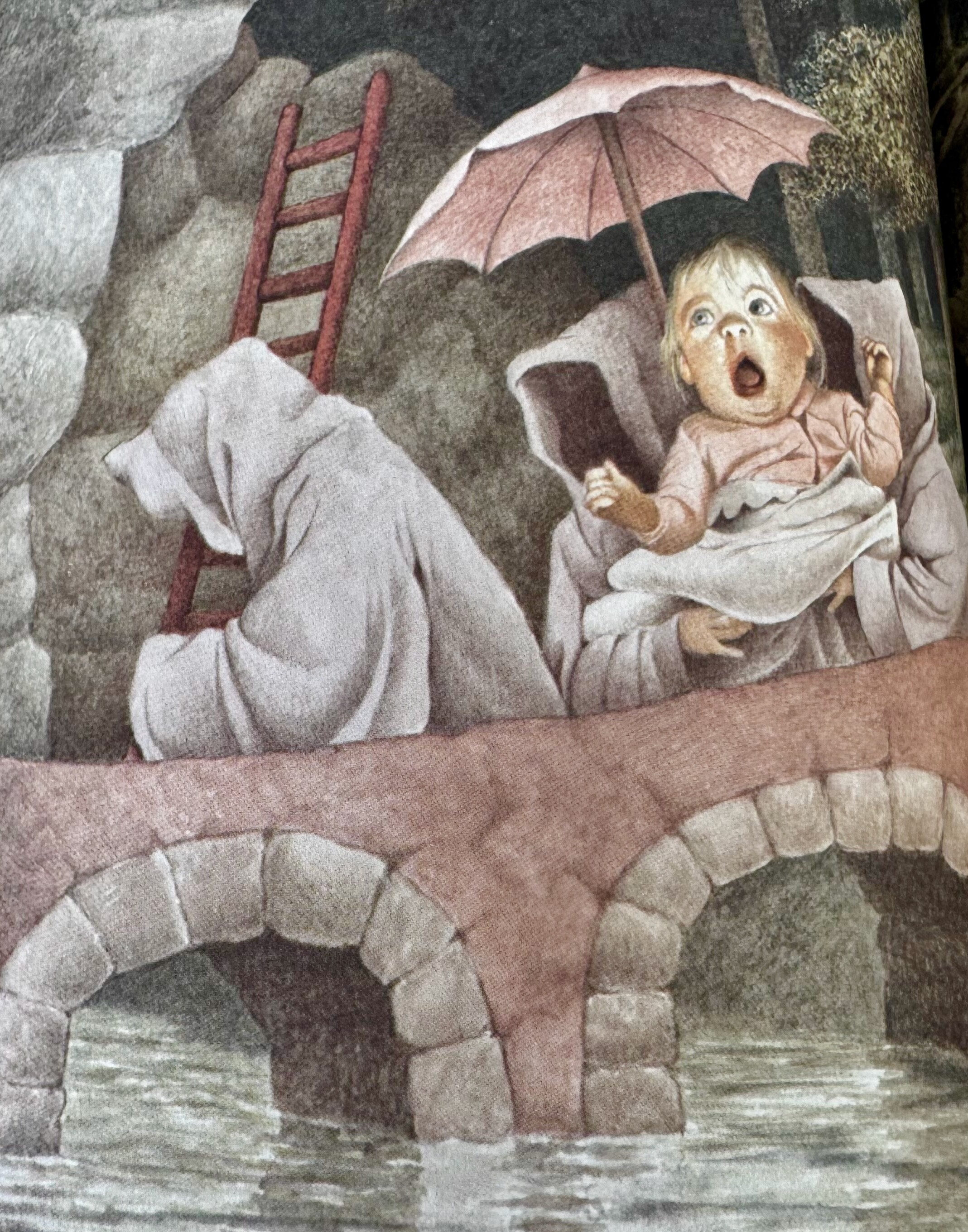
While floating helplessly through rainy skies, Ida hears a spectral voice from off the sea. It's apparently a psychic visitation from Papa, who sings to Ida, telling her to turn around and focus on the situation at hand. And it works! She falls to the ground, landing right in the middle of her sister's goblin wedding.
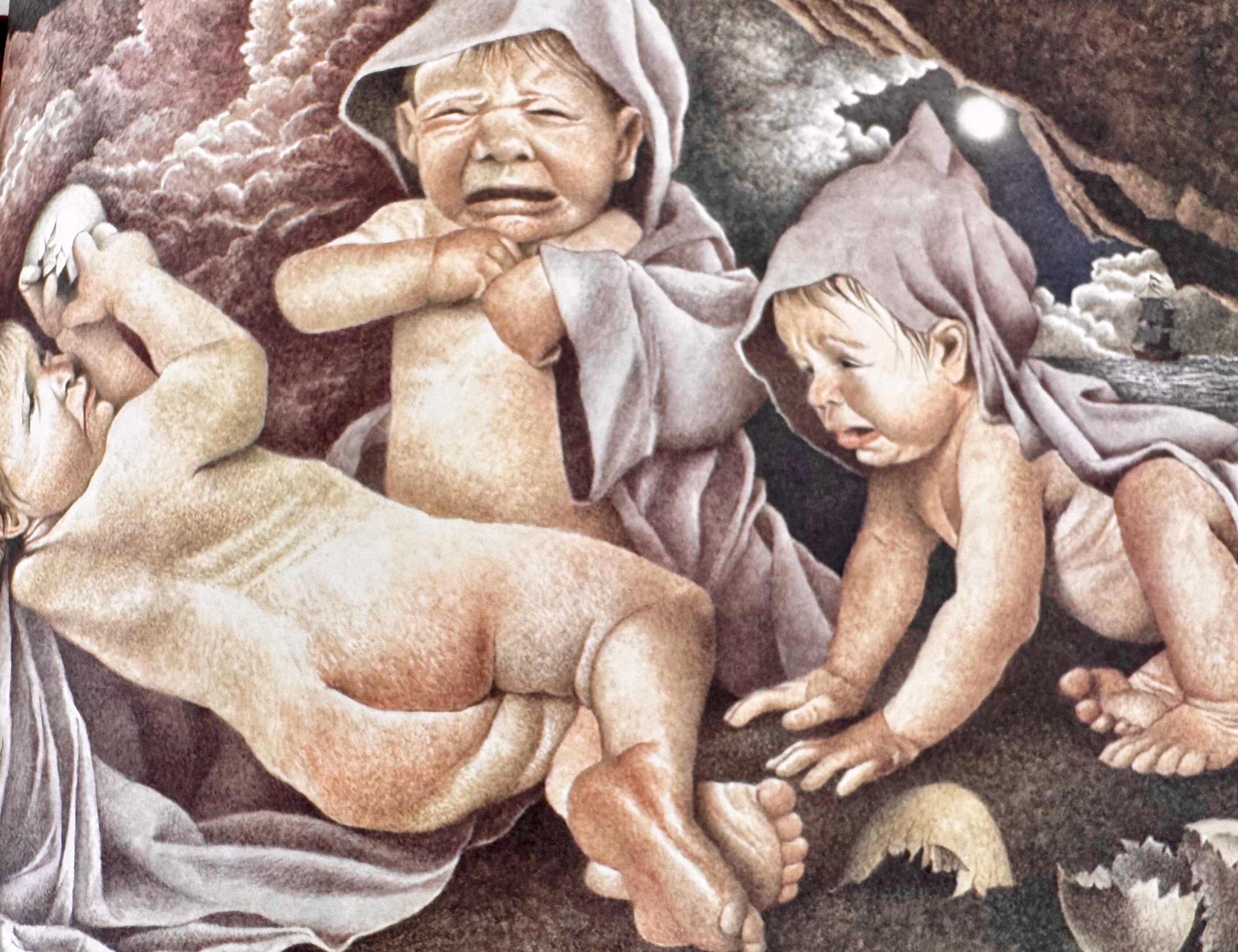
Now here's a surprise: all of the goblins, who in previous illustrations appear as faceless beings dressed in monkish attire, are now revealed as grumpy naked babies who "hollered and kicked" just like her sister.
Undeterred by the outcome of her last attempt to lull a baby with music, Ida quickly breaks out her horn and starts wailing on it. As she plays, the goblins find they are forced to dance, faster and faster, until they can't breathe. They beg Ida for mercy, but she's relentless, and ultimately they dissolve into a babygoblin death-stream.
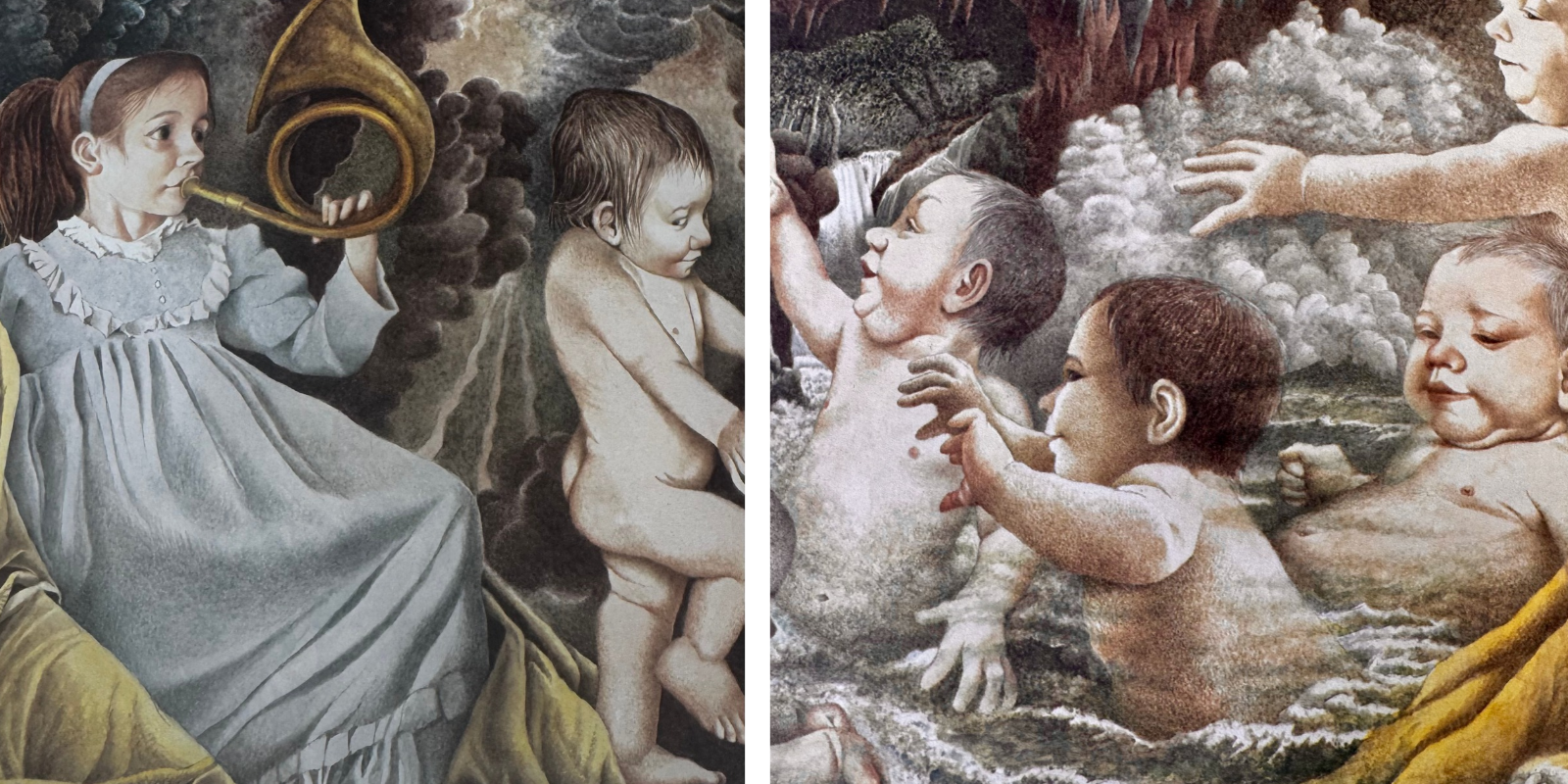
Only one baby remains, cozily curled up in a giant eggshell. And that was Ida's sister.
Scooping up the baby, Ida makes her way back to Mama, who's still lurking in the arbor. While seemingly unconcerned about the whereabouts of her daughters, she does appear slightly heartened by a letter she's somehow received in the interval.
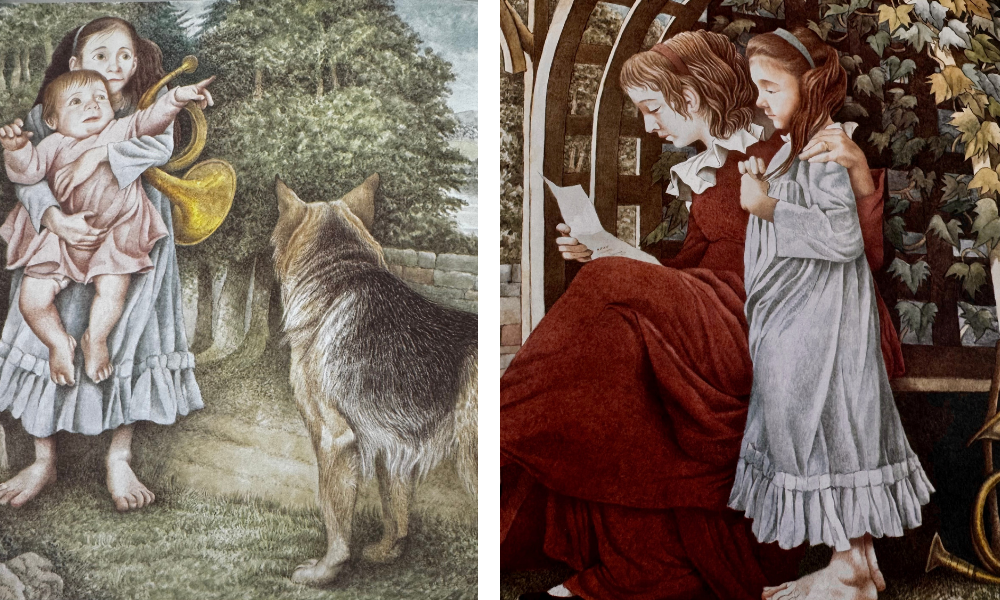
It's from Papa, who sends his love, but offers no set timeframe for his return, other than "I'll be home one day." In his continued absence, he writes, Ida must "watch the baby and her Mama."
By this point, Ida has proven herself more than capable of doing so, but still, it's a lot to ask of a child living in a neighborhood where monsters roam.
After all, who knows what else is outside over there?